In the cellar
How port is made, vine to cask
From terraced Douro vineyards to the lodges of Gaia: the steps behind the port in your glass, explained before your cellar tour.
Book the cellar tour with fado ↗A wine with two homes
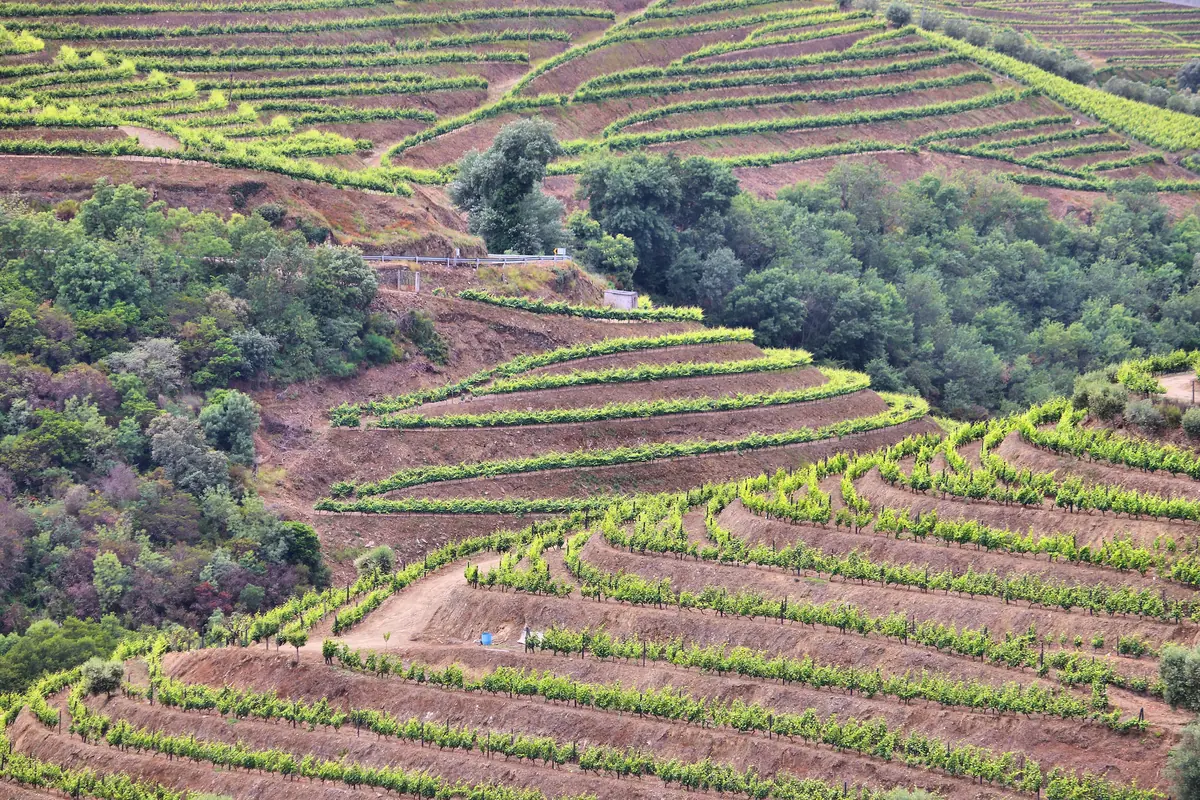
Port grows in one place and matures in another. The grapes come from the demarcated Douro region, well upriver from Porto, where vines cling to steep slopes of schist and granite. The young wine then traditionally travels down to Vila Nova de Gaia, on the opposite bank from Porto, to age in the lodges. Knowing that split makes a cellar tour easier to follow: the guide is telling the second half of a story that begins in the valley.
A protected region since 1756
The Douro's boundaries were drawn in 1756, under the Marquis of Pombal, when a royal company was set up to control the quality and trade of port. Wikipedia describes the Douro as one of the oldest protected wine regions in the world. Under European Union rules, only wine from Portugal may be sold as port. Inside the region, three zones run from west to east, from the wetter Baixo Corgo to the hot, dry Douro Superior near the Spanish border.
Harvest and treading
Portugal's port wine institute, the IVDP, places the harvest between the end of August and mid-October. Red grapes for port are picked riper; white grapes usually earlier, for freshness. The traditional method crushes the grapes underfoot in wide stone tanks called lagares. Many wineries now use electric crushers, robotic treading tanks and steel tanks in which the fermentation temperature can be controlled, the IVDP notes.
The step that makes it port
Port is a fortified wine. Partway through fermentation, before the yeast has turned all the sugar into alcohol, the wine is drawn off and a neutral grape spirit is added. The IVDP gives the usual proportion as one part spirit to four parts wine. The spirit stops the fermentation, so natural sweetness stays in the wine, and the strength rises to between 19 and 22 per cent. How early the spirit goes in decides how sweet the port will be.
Down the river to Gaia
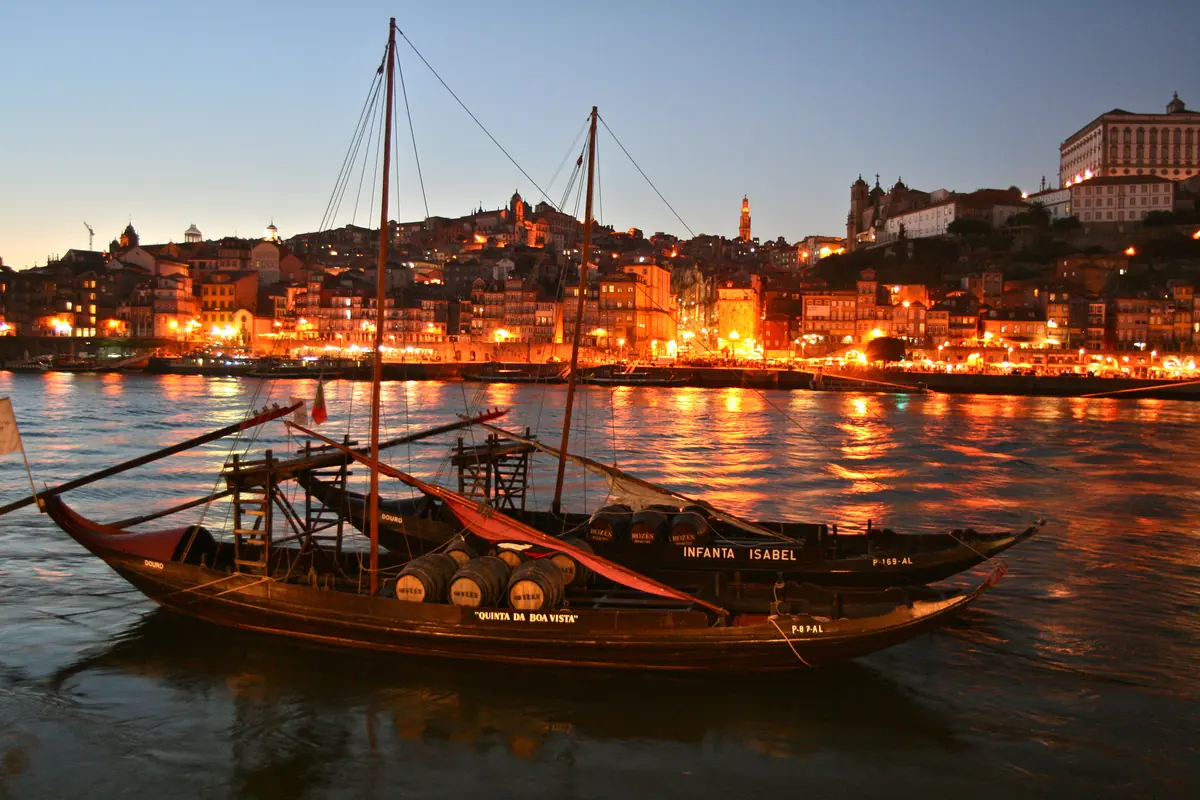
In spring the new wines are tasted, classified and blended, and the winemaker decides whether each will age in the Douro or in the bonded lodges of Vila Nova de Gaia. For centuries the casks came downriver in rabelos, flat-bottomed boats steered by a long oar at the stern. Hydroelectric dams built on the river in the 1950s and 1960s ended that trade, and tanker trucks now do the work. Rabelos still sit on the river in front of the lodges, and race every June on St John's Day.
Wood or bottle
The final character of a port depends on where it ages. Wines kept away from air, in large vats and then in bottle, hold their deep red colour and young fruit: the ruby family, which runs up to late bottled vintage and vintage port. Wines left in smaller wooden casks slowly breathe through the wood, lose colour and a little volume to evaporation, and turn amber and nutty: the tawny family. On a cellar tour, the vats and the rows of smaller barrels around you are those two paths.
What you see on a cellar tour
Inside a Gaia lodge the process becomes visible. Tall wooden vats hold large volumes of wine, while rows of smaller casks, often stacked several high, hold the wines meant to age in close contact with wood. The trade calls the wine lost to evaporation through the staves the angel's share, Wikipedia notes, and it is part of why old tawnies taste so concentrated. Look for the numbers painted on the cask ends as you pass. Cockburn's, another Gaia lodge, keeps a working cooperage where the casks themselves are repaired.
Sources